Small rooms rarely need less storage; they need storage that uses space more intelligently. When floor area is limited, the walls become valuable real estate. The challenge is adding capacity without making every vertical surface look packed. The best vertical storage styling ideas for small rooms combine practical organization with visual breathing room, so storage feels designed rather than improvised.
That means thinking beyond simply “going up.” Height, proportion, colour, placement, and the balance between open and closed storage all affect how a room feels. A tall unit can create order and draw the eye upward, while a badly placed one can make the same space feel crowded.
Plan the Wall Before Buying Storage
Start by finding wall areas that are underused but easy to access: above a desk, beside a wardrobe, behind a door, over a low cabinet, or in a narrow corner. These spots can add useful storage without stealing circulation space. Avoid overloading the busiest wall; concentrating storage in a few deliberate zones usually looks calmer than scattering organizers around the room.
Build Storage in Layers
Vertical storage often looks better when it rises in stages rather than appearing as one heavy block. A low cabinet with floating shelves above it, for example, gives you concealed storage at floor level and lighter display space higher up. Everyday clutter can stay behind doors while books, baskets or decorative pieces remain visible.
Use Narrow Tall Furniture in Awkward Gaps
Small rooms often contain slim gaps that standard furniture ignores. A narrow bookcase beside a wardrobe, a tall shelving tower near a desk, or a shallow cabinet by a doorway can turn one of those gaps into useful storage.
Imagine a compact bedroom with a narrow gap beside the wardrobe. A slim shelving unit could hold folded accessories, small baskets and a reading lamp. If the top shelves are kept lightly styled instead of completely full, the unit looks intentional rather than like an overflow area. In tight spaces, shallow furniture is often more useful than deep furniture because it preserves walking room.
Make Floating Shelves Feel Built Into the Scheme
Floating shelves are effective vertical storage ideas because they add capacity without the visual weight of floor-standing furniture. Their success depends on spacing and alignment. Align shelves with nearby furniture where possible, keep widths consistent, and leave some open space around displayed objects.
A shelf does not need to be full to earn its place. Books, attractive boxes, a small plant and a few practical items can create a more polished result than a tightly packed row of miscellaneous objects. Repeating one or two materials across the shelves also makes wall storage styling feel more cohesive.
Use Repetition to Make Storage Look Styled
If a room already uses light wood and black metal, storage boxes and accessories in those finishes can visually connect the shelves with the rest of the space. Matching or coordinated containers make practical items look less cluttered. Vary the height of objects, but avoid introducing too many finishes at once.
Take Cabinets Higher Without Making Them Feel Heavy
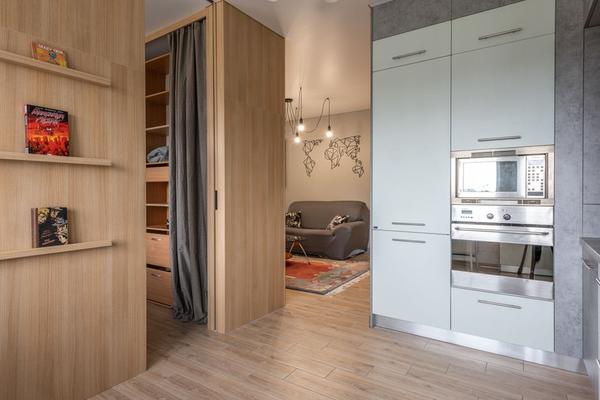
Tall cabinets are useful when you need serious storage, particularly in rented homes where built-ins may not be an option. A cabinet that reaches close to the ceiling uses space that would otherwise sit empty and can make the wall feel taller.
Store rarely used items at the top and daily essentials between waist and eye level. If the upper section is open, keep it simple with matching boxes, a short row of books or one or two larger objects. If the unit has solid doors, a finish close to the wall colour can help it recede visually.
Turn Corners Into Useful Vertical Zones
Corners are often overlooked because conventional furniture tends to sit along straight walls. A corner shelf, narrow ladder unit or compact wall-mounted system can add useful storage without dominating the room. This works well for books, toiletries, office supplies or lightweight display pieces.
In a tiny home office, corner shelves above the desk can hold notebooks and supplies while keeping the work surface clear. Position the lowest shelf high enough that it does not interfere with comfortable movement, and keep frequently used items within easy reach.
Use Doors and High-Level Storage Selectively
The backs of doors and the space above door frames can help with small room organization, but they work best as secondary storage. Over-door organizers can hold accessories or light household items, while a high shelf above a doorway can store seasonal or rarely used belongings. Matching containers help these high-level zones look orderly rather than miscellaneous.
Leave Empty Space Around Tall Storage
One of the easiest mistakes is trying to use every available centimetre. Efficient storage still needs negative space. If a tall bookcase reaches the ceiling, avoid crowding both sides with wall art. If several shelves occupy one part of the wall, let the adjacent area remain quieter.
This visual pause helps prevent the room from feeling top-heavy. Small spaces generally benefit from fewer, stronger storage arrangements rather than many disconnected solutions. Giving storage clear boundaries is as important as increasing capacity.
Keep Safety and Access Practical
Wall-mounted storage should be fixed appropriately for the wall type and the weight it will carry. Keep heavy objects lower, store lighter or infrequently used items higher, and avoid placing unstable objects directly above beds or seating areas.
In rental properties, check what fixings are permitted before installing shelves or cabinets. Freestanding tall units can be a flexible alternative, but they may still need anti-tip securing. Good vertical storage should make a room easier to live in, not create awkward or unsafe access.
Frequently Asked Questions
How can I add vertical storage without making a small room look crowded?
Concentrate storage on one or two useful walls, combine closed and open storage, repeat materials, and leave some wall space empty. This keeps the arrangement visually controlled.
Are floating shelves good for very small rooms?
Yes. Floating shelves can provide useful storage without using floor space, especially above desks, low cabinets and other furniture. Choose a depth that does not interfere with movement.
What should go on the highest shelves?
Use the highest shelves for lightweight, infrequently needed items such as seasonal accessories, spare linens or labelled boxes. Keep everyday essentials within comfortable reach.
How do I make vertical storage look more stylish?
Repeat colours and materials already used in the room, vary object heights, use coordinated containers and resist filling every shelf. Treat storage as part of the room’s composition rather than as a place to hide everything.
Make Height Work Harder Without Making the Room Feel Smaller
The strongest vertical storage styling ideas for small rooms do more than squeeze extra capacity onto the walls. They improve how the room functions while giving the eye a clear, organized path around the space. Start with underused wall zones, choose storage that fits the room’s scale, and combine concealed storage with lighter display areas.
Most importantly, give the arrangement room to breathe. When storage has clear boundaries, repeated materials and a little empty space around it, a small room can feel more organized, balanced and considered at the same time.