Curtain rods look simple until you compare diameters, brackets, tracks, and weight ratings. The right choice depends on the curtain, the width of the opening, and how often the panels will move. A lightweight sheer on a narrow kitchen window needs very different support from lined drapes across a wide living-room opening.
This curtain hardware guide covers the main types of curtain rods and what to check before buying. It also explains the practical difference between a tension rod vs bracket rod, when a double curtain rod is useful, and why wide or heavy treatments need extra support.
Decorative Single Curtain Rods
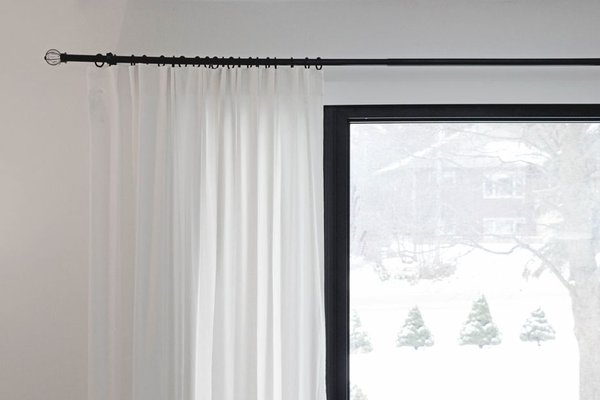
A decorative single rod is the standard choice for one curtain layer. It usually consists of a metal or wood rod, wall brackets, and finials or end caps. Because the rod remains visible, its diameter and finish become part of the room’s design.
Single rods can work with grommet, tab-top, back-tab, rod-pocket, and ring-hung curtains when the rod diameter suits the heading. Telescoping versions make sizing easier. For heavy drapes, choose a sturdier rod and follow the manufacturer’s stated load and support requirements rather than judging strength by appearance alone.
Tension Rods
Tension rods fit inside a window frame or recess without permanent brackets. A spring or twist mechanism presses the ends against opposing surfaces, making installation quick and drill-free. They are useful for lightweight café curtains, sheers, small privacy panels, and temporary or rental-friendly setups.
In a tension rod vs bracket rod comparison, the main trade-off is convenience versus support. Tension rods rely on friction and surface contact, while bracket rods transfer the load through screws, anchors, or studs. That makes bracket-mounted hardware the better choice for heavier curtains, long spans, and panels opened and closed every day. Check the specific tension rod’s rated capacity because limits vary by model and mounting surface.
Double Curtain Rods
A double curtain rod holds two curtain layers on parallel rods. A common setup places sheers or light-filtering curtains on the inner rod and decorative or blackout panels on the outer rod. This lets you adjust privacy and daylight without removing either layer.
Double rods project farther from the wall, so bracket depth matters. Check that both curtains will clear window trim, handles, blinds, or radiator covers. Also consider the combined weight of both layers, which can place much more demand on the wall fixings than a single curtain.
Traverse Rods
Traverse rods use carriers that slide along a track, allowing curtains to move smoothly from side to side. Traditional versions may operate with a cord, while others use a wand or draw system. They are especially practical for pinch-pleat draperies and large windows where pulling directly on the fabric would be awkward.
The main advantage is controlled movement. The curtain is supported at multiple points along the track, helping large panels open evenly. Before buying, check whether the system is designed for one-way or center-opening curtains and whether its carriers match your curtain hooks.
Wraparound and Concealed Rods
Wraparound rods curve back toward the wall at each end. This reduces the side gap between curtain and wall, improving light control and privacy with blackout curtains. They are useful in bedrooms and media rooms where edge light is distracting.
Concealed rods or tracks are chosen when the hardware should visually disappear. Wall- and ceiling-mounted versions suit minimalist rooms, floor-to-ceiling curtains, and spaces where decorative finials would compete with other features. Any ceiling fixing must suit the structure and curtain weight.
Café and Sash Rods
Café rods are slim rods for short curtains that cover part of a window, often in kitchens or bathrooms. Sash rods are similarly lightweight and commonly hold small panels close to a door or window. Both are best treated as light-duty hardware.
How to Choose the Right Curtain Rod
Match the Rod to the Curtain Weight
Start with the complete treatment, not just the fabric. Lining, rings, hooks, and a second curtain layer all add weight. Product limits are not standardized across every rod, so use the manufacturer’s rating and installation instructions. For substantial drapes, bracket-mounted rods secured into studs or suitable anchors generally provide more dependable support than friction-fit hardware.
Plan Support for Wide Windows
Long rods are more likely to bow, especially near their maximum extension. Many long-rod kits include a center support, and very wide spans may require additional brackets. The exact spacing should follow the hardware manufacturer’s instructions.
For example, an extra-wide bay window with three lined curtain sections may be a poor match for one oversized straight rod. A bay-window rod system, joined sections, or a track designed for corners can follow the angles and distribute the load more effectively. Measure each section and note the bay angles before ordering hardware.
Check Projection and Clearance
Bracket projection determines how far the rod sits from the wall. Allow enough clearance for trim, blinds, shades, handles, and layered curtains. With a double curtain rod, confirm both layers can move without rubbing heavily against each other.
Match the Hardware to the Curtain Heading
Rod pockets and tabs may slide directly onto a rod, while pinch-pleat curtains usually need hooks and compatible rings or traverse carriers. Grommet curtains need a rod narrow enough to pass through the eyelets but substantial enough to look proportionate. Treat the curtain and hardware as one system rather than two separate purchases.
Natural next reads for planning the full treatment include a curtain measurement guide, how to hang curtains, and how to choose curtain length. Measuring first helps keep the rod, brackets, heading style, and wall construction compatible.
Frequently Asked Questions
What type of curtain rod is best for heavy curtains?
A sturdy bracket-mounted rod designed and rated for heavier drapery is usually the best choice. Use the recommended number of supports and suitable wall fixings. Long spans may need a center support or additional brackets.
Are tension rods strong enough for blackout curtains?
Some heavy-duty tension rods can carry more than lightweight café curtains, but there is no universal capacity. Blackout panels can be heavy, so check the rod’s stated rating and the mounting surfaces. For full-length or frequently moved blackout drapes, bracket-mounted hardware is often more reliable.
When should I use a double curtain rod?
Use a double rod when you want two independently functioning layers, such as sheers behind blackout or decorative curtains. It is especially useful when you regularly change privacy or light levels during the day.
Do wide curtain rods always need a center bracket?
Not always. It depends on rod material, diameter, span, curtain weight, and the manufacturer’s design. Follow the supplied installation instructions rather than relying on one spacing rule for every product.
Choosing Hardware That Works Long Term
The best types of curtain rods are the ones that suit both the fabric and the way the window is used. Tension rods make sense for light, temporary installations; decorative bracket rods cover most everyday curtains; double rods handle layered treatments; and traverse or concealed systems solve more specialized movement and design needs. For heavy drapes or extra-wide windows, prioritize load ratings, bracket placement, and secure mounting before finish or finial style. Good hardware should let curtains hang evenly and move smoothly without sagging.