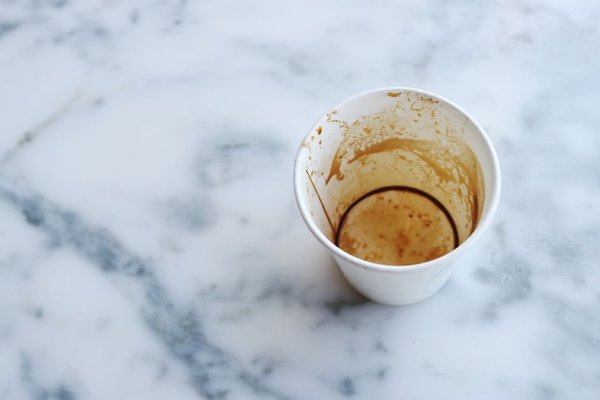
A knocked-over mug can leave a dark patch on a carpet, especially when coffee has soaked below the surface. Fresh spills often respond to careful blotting and rinsing. A dried coffee stain takes more patience, but it is still worth treating before assuming the mark is permanent.
The trick is to remove liquid without spreading it, then lift remaining colour with a carpet-safe treatment. Coffee, cream, sugar and the carpet fibre all affect the result. Begin gently rather than reaching for the strongest cleaner.
What to do immediately after a coffee spill
Grab several clean, white absorbent cloths or plain paper towels. White material shows whether coffee is transferring and avoids dye coming off a coloured towel.
Step 1: Blot up the coffee
Press a folded towel onto the wet patch, lift it straight up and move to a clean section. Work from the outside towards the centre. Repeat until the towel picks up little liquid. Never scrub or twist the fibres.
For example, if a full mug lands beside the sofa, blot the outer ring before pressing over the darkest centre. This helps prevent a larger brown halo forming.
Step 2: Dilute the remaining coffee
Dampen a fresh white cloth with cool water and blot the patch. Avoid pouring water directly onto the carpet. You want to dilute coffee near the surface, not push it into the backing or underlay.
Switch to clean sections of cloth as brown colour transfers. Stop adding moisture if the carpet feels saturated. Coffee trapped below the pile can reappear after drying.
Step 3: Try a mild spot treatment
If water leaves a mark, and the manufacturer’s instructions allow it, mix no more than a quarter teaspoon of plain liquid hand-dishwashing detergent with one cup of water. Avoid bleach, automatic dishwasher detergent and laundry detergent.
Test in a hidden area and let it dry before treating the visible stain. If colour or texture changes, stop. Lightly dampen a cloth with the solution, dab from edge to centre and blot with a dry towel. Repeat gently while colour continues transferring.
Step 4: Rinse and dry
Use a cloth lightly dampened with clean water to lift detergent residue. Blot repeatedly with a dry towel. Leftover soap can attract dirt and make the cleaned patch look grubby later.
Allow the area to air-dry with ventilation and no foot traffic. Once dry, vacuum gently to restore the pile. Judge the result after drying; wet carpet can hide a faint mark.
How to remove a dried coffee stain from carpet
Old spills need a different approach because the water has evaporated and left colour behind. Vacuum loose dirt or crumbs. Then hold a cool-water-dampened white cloth over the mark for a few minutes to soften surface residue without saturating the carpet.
Lift the cloth and blot. If care instructions permit detergent, use the weak solution described above. Apply sparingly, wait a few minutes and blot rather than rubbing. Rinse with a damp cloth and press dry towels over the area.
One pass may lighten rather than completely remove coffee stain marks. Another gentle pass may help if the carpet remains colourfast and brown residue still transfers. If there is no improvement, stop instead of applying stronger household chemicals. Coffee’s colouring compounds can become difficult to remove after soaking into certain fibres.
Does coffee with milk or sugar need different treatment?
Yes, although the first response remains blotting. Black coffee mainly leaves coloured residue, while a latte or sweetened drink may leave milk fat, proteins and sugar. These extras can make carpet sticky or smelly if residue remains.
After blotting and a little water, compatible mild detergent may help remove residue. Rinse and dry thoroughly. Do not soak the patch: excess water can carry coffee and milk into the backing.
If a large milky coffee spill reaches the underlay, surface carpet spot treatment may not be enough. Persistent odour, stickiness or a recurring dark patch warrants professional assessment.
Mistakes that can make coffee stains worse
Scrubbing with a stiff brush can damage the pile and spread the stain. Flooding the area can create a ring as diluted coffee moves and later wicks upwards. Too much detergent leaves residue that attracts dirt.
Be cautious with online remedies. Vinegar, baking soda, hydrogen peroxide and strong stain removers are not universally safe. Some affect carpet dyes or finishes, particularly on natural fibres. Never mix cleaning chemicals or use chlorine bleach on an unidentified carpet.
Steam and very hot water are poor first choices for an uncertain coffee stain, especially on delicate materials. Begin with cool-water blotting and follow the manufacturer’s care guidance.
Check the carpet fibre before cleaning
Many synthetic fitted carpets tolerate small, tested water-based treatments, but dyes, backing and stain-resistant finishes vary. Check care instructions and test any cleaner where colour change would not show.
Wool, handmade rugs, silk and viscose need extra caution. For wool, blot promptly and use only a fibre-approved product or process. If the material is unknown, water-only blotting followed by professional advice is safer than chemical experiments.
For other household accidents, keep guides on removing tea stains from carpet, choosing a carpet-safe spot cleaner and drying a wet carpet handy. Each method still needs to suit the fibre and spill.
When professional cleaning makes more sense
Consider expert help if the stain survives careful treatment, the carpet loses colour or coffee soaked through a large area. A mark that disappears while damp but returns after drying may be wicking from deeper layers. More scrubbing will not solve that.
A professional can assess the fibre, residue and suitable extraction methods. Complete removal is not guaranteed, especially with an old spill on natural fibres.
Frequently asked questions
Can you get a coffee stain out of carpet after it dries?
Often, yes. Lightly moisten the mark, blot, then try a tested, carpet-compatible detergent solution if needed. Old stains may need repeat treatment or professional cleaning, and some colour may remain.
Should I use baking soda on a coffee spill carpet stain?
Baking soda is unnecessary for basic removal and may leave powder in the pile. Start by blotting, using a little cool water and rinsing any compatible cleaner thoroughly.
Will vinegar remove a coffee stain?
Vinegar appears in some cleaning advice, but is not appropriate for every fibre or finish. A tested, manufacturer-approved cleaner is a more dependable starting point.
Why does the brown mark return after cleaning?
Coffee trapped in backing or underlay can travel upwards while carpet dries. This is called wicking. Limit moisture and seek professional assessment if the stain repeatedly returns.
A gentler approach works best
When you need to remove coffee stain marks from carpet, speed helps, but restraint matters too. Blot fresh liquid, use minimal water, treat remaining colour with a fibre-safe product, rinse and dry completely. For dried stains, soften residue first and work patiently. A few careful passes are kinder than one vigorous scrub.