
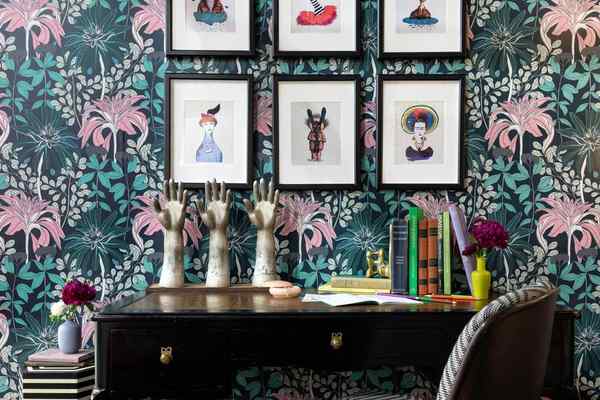
For years, the safest-looking room was often the emptiest: pale walls, restrained furniture, and very little on display. In 2026, interiors are moving toward something warmer and more personal. Thoughtful maximalism is part of that shift, but it is not permission to fill every surface. It is a method of layering colour, pattern, texture, art, and meaningful objects so a room feels expressive without becoming exhausting.
The most useful thoughtful maximalism decorating principles are based on composition rather than consumption. A successful room may contain many elements, yet each one has a role. There is hierarchy, repetition, breathing space, and a clear relationship between decoration and daily life. The result feels collected over time rather than bought in a single weekend.
Begin With a Point of View
Maximalist decorating works best when the room begins with a personal idea. It might come from a favourite painting, an inherited rug, a collection of ceramics, or the atmosphere of a memorable hotel. Without a point of view, “more” quickly becomes random. With one, contrasting pieces can still feel connected.
Before adding anything, describe the room in three words. “Warm, literary, and playful” gives you a better filter than “maximalist.” A glossy chrome lamp may be attractive, but it may not belong in that story. This test keeps eclectic interior styling focused while leaving room for surprise.
Build a Colour Thread
Thoughtful maximalism does not require every colour to match, but it benefits from recurring tones. Choose one dominant colour, one or two supporting colours, and a smaller accent. The dominant shade might cover the walls or a large sofa. Supporting colours can move through curtains, rugs, and artwork, while the accent appears in a lampshade, book spine, or trim.
Mix Patterns by Varying Scale
Pattern mixing becomes uncomfortable when every print competes at the same volume. A layered decor style needs variation. Combine a large botanical or sweeping mural with a medium geometric, then add a smaller stripe, check, or dot. Changing the scale creates rhythm and prevents the room from looking visually flat.
It also helps to repeat at least one colour across the patterns. A floral curtain, striped chair, and patterned rug do not need identical palettes, but a shared rust, navy, or olive note can make the combination feel deliberate. For a simple starting point, place pattern on three planes: the floor, furniture, and a wall or window.
Create a Clear Visual Hierarchy
A maximalist room still needs a place for the eye to land. Decide what should be noticed first, second, and third. The focal point might be a dramatic sofa, painted fireplace, oversized artwork, or densely arranged bookcase. Supporting elements should add depth rather than demand equal attention.
Turn Collections Into Stories
Collections give maximalist decorating its emotional weight. Books, ceramics, travel finds, photographs, textiles, and inherited pieces can make a home unmistakably personal. The key is to display them with structure.
Group related objects, vary their heights, and leave small gaps between clusters. A shelf of unrelated pieces may look crowded, while the same objects arranged as three distinct stories can feel intentional. Rotate items instead of forcing an entire collection into one room. Editing does not weaken the style; it gives each object more presence.
Use Quiet Surfaces as Visual Pauses
Maximalism is often misunderstood as the removal of all empty space. In reality, quieter areas make decorative moments easier to appreciate. Patterned wallpaper may need a solid-colour sofa in front of it. A gallery wall can feel stronger above a simple console. Layered textiles may benefit from one plain curtain or unpatterned area of flooring.
Layer Texture Before Adding Objects
When a room feels unfinished, the answer is not always another accessory. Texture adds richness without increasing clutter. Velvet, linen, wool, lacquer, aged wood, woven fibres, glass, metal, and handmade ceramics reflect light differently and create depth.
Try combining one soft texture, one rough texture, and one reflective finish in the same area. A velvet chair beside a carved wood table and glass lamp may feel more layered than a shelf filled with ornaments. This approach is especially useful in smaller rooms.
Let Function Control the Final Layer
A beautiful room should still support ordinary life. Walkways need to remain clear, lamps should provide useful light, and frequently used surfaces need enough open space for a cup, laptop, or book. Maximalism has failed if cushions must be removed before anyone can sit down or decorative objects make cleaning impossible.
Consider a living room built around a green velvet sofa and a vintage-style rug. Floral curtains introduce a large pattern, while striped cushions add a smaller one. A gallery wall includes family art and collected prints, but the coffee table holds only a tray, two books, and a lamp. The colour story is rich, yet seating, lighting, and circulation remain practical. That balance separates a layered home from a crowded set.
Edit in Stages
Maximalist rooms often improve slowly. Add a layer, live with it, and notice where the room feels empty, repetitive, or overstimulating. A photograph can reveal problems that are difficult to see in person. Several small objects may look stronger as one grouped display, while one oversized artwork may replace multiple competing pieces.
Finish with a subtraction test. Remove one item from each busy surface and reassess the room. If nothing is lost, keep it out. Good eclectic interior styling is generous, but it is never afraid to edit. Related ideas worth exploring include colour drenching, pattern mixing for beginners, and gallery wall styling.
Frequently Asked Questions
What is thoughtful maximalism?
Thoughtful maximalism is an intentional approach to decorating with colour, pattern, texture, art, and collections. Unlike uncontrolled clutter, it uses repetition, hierarchy, scale, and editing to create a room that feels rich and personal.
Can maximalist decorating work in a small room?
Yes. Use a controlled colour palette, vary pattern scale, and prioritise walls, textiles, and lighting over large numbers of objects. Fewer, larger decorative choices often create more impact than many tiny accessories.
How many patterns can be used in one room?
There is no fixed limit. Compatibility matters more than quantity. Patterns are easier to combine when their scales differ and at least one colour repeats across them. Start with three and add more only when the room still feels balanced.
How do you stop maximalism from looking cluttered?
Keep walkways clear, group collections, leave some quiet surfaces, and choose a focal point. Every visible item should contribute colour, shape, texture, function, or personal meaning.
A More Personal Kind of Abundance
The appeal of thoughtful maximalism in 2026 is not simply that it rejects stark minimalism. It offers a flexible way to create homes with memory, humour, craft, and individuality. The strongest rooms are not those containing the most things, but those in which colour, pattern, collections, and practical needs have been composed with care.
Begin with what matters to you, establish a visual thread, and layer gradually. When every addition strengthens the room’s story, maximalism feels less like excess and more like belonging.