
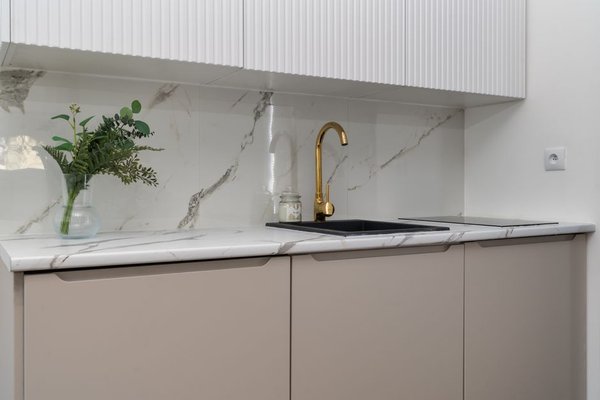
A chip in a laminate countertop can look dramatic even when the damage is small. If the surrounding laminate is firmly bonded and the core underneath is dry, a careful cosmetic repair can hide the exposed spot, remove a sharp edge, and postpone the cost of replacing the counter. The goal is to create a neat repair that blends into everyday kitchen use.
Check whether the chip is suitable for repair
Laminate is a thin decorative surface bonded to a wood-based core, often particleboard. Once that top layer chips away, it cannot be polished back like solid surface material. Manufacturers generally consider damaged high-pressure laminate non-renewable, although repair fillers can mask small defects. A successful laminate countertop repair may become hard to notice without being literally invisible.
A DIY repair makes sense when the chip is small, the surrounding surface is solid, and the exposed core has not swollen. If the area feels soft, keeps cracking, or has expanded from water, deal with the moisture or bonding problem first. Large missing sections, burns, and widespread delamination usually call for resurfacing or replacement rather than a simple countertop chip fix.
Choose a filler that matches the surface
For a shallow chip, use a laminate repair paste, color-matched filler, or a two-part repair compound specifically suitable for laminate. A hard-curing product is generally better for a working countertop than a temporary wax touch-up. If you know the countertop brand and pattern name, check for a matching repair product before settling for a generic color.
Patterned laminate is often easier to disguise than a plain solid color. Match the dominant background shade first instead of trying to reproduce every speck or vein. Also consider sheen. A glossy filler on a matte counter, or a flat patch on a shiny finish, can remain noticeable even when the color is close.
Clean and prepare the damaged area
Remove crumbs, grease, dust, and loose laminate fragments. Clean the area with a mild product compatible with the laminate, then let it dry completely. Avoid soaking exposed particleboard because moisture can cause swelling and make the damage larger.
Trim only material that is already loose. If a small original fragment still fits perfectly, save it; reattaching that piece can produce a better color match than filling the entire cavity. Do not dig into sound laminate just to create a larger hole.
Fill the chip carefully
Prepare the repair compound according to its instructions. Press a small amount into the deepest part of the chip with a plastic scraper or non-scratching applicator, working it into the cavity so you do not trap air underneath. Slightly overfill the spot if the product is designed to be leveled after curing, but avoid spreading filler across a wide area.
For a deeper kitchen counter repair, two thin applications are often easier to control than one thick layer. Let each layer cure as directed before adding more. Different products have different working and curing times, so follow the stated timing.
Consider a pea-sized chip on the front edge beside a dishwasher. That edge is handled constantly, so leaving a hard blob of filler will make the repair obvious and uncomfortable. Fill the cavity, let the material cure, then shape it to follow the original edge profile. A slightly softened corner is less likely to catch on clothing while still protecting the exposed core.
Level the repair without scratching the laminate
After the filler cures, remove excess material using the method recommended for that product. Some fillers can be scraped carefully flush; others permit very light sanding. If sanding is allowed, work only on the repaired spot with gentle pressure. The decorative layer of laminate is thin, and aggressive sanding can turn a small chip into a larger dull patch.
Run a fingertip lightly across the area. The finished repair should feel smooth, without a ridge that catches. If the filler sits low, add another tiny layer instead of smearing compound over the surrounding surface.
Blend the color and finish realistically
Step back several feet and look at the repair under normal kitchen lighting before adding more color. Small repairs are often made more noticeable by overworking them. On a speckled or stone-look pattern, subtle variation may blend naturally, while solid-color laminate demands a closer match.
Do not coat the entire counter with an improvised clear finish just to disguise one spot. An incompatible coating may peel, discolor, or create an uneven sheen. If the filler does not match well enough, replacing it with a better color is usually safer than adding multiple surface coatings.
Protect the repaired area
Give the repair its full stated cure time before exposing it to water, cleaners, heat, or heavy use. Afterward, use cutting boards, place hot cookware on trivets, and wipe standing water near seams and edges. If the chip was caused by repeated impact at a corner, preventing the next impact matters as much as the filler itself.
Related topics that make natural internal links include repairing loose laminate edges, preventing water damage around countertop seams, and cleaning laminate countertops without dulling the finish.
Common mistakes to avoid
The biggest mistakes are filling over grease or moisture, using a poor color match, sanding beyond the chip, and expecting cosmetic filler to repair swollen substrate. Rushing the cure is another problem. Material that feels dry on top may still be soft underneath, and cleaning or pressing it too soon can pull it from the cavity.
Use a product intended for the surface and follow its ventilation, safety, cleanup, and cure instructions. When damage is beside a sink cutout, seam, or appliance opening, check for moisture before focusing on appearance.
Frequently asked questions
Can a chipped laminate countertop be repaired invisibly?
A small chip can sometimes be blended very well, especially on a busy pattern, but a completely invisible repair is not guaranteed. Solid colors and glossy finishes usually reveal differences in shade, texture, or sheen more easily.
Can I use super glue to fill a laminate chip?
Super glue may help reattach a clean broken fragment in some situations, but it is not an ideal general filler for missing material. A laminate-compatible repair compound is usually easier to shape and color-match.
What if the particleboard underneath is swollen?
Do not simply cover swelling with filler. Stop the moisture source first. Swollen substrate can distort the laminate and prevent a stable repair, so rebuilding the edge, resurfacing, or replacing the affected section may be more appropriate.
How long should I wait before using the countertop?
Follow the cure time stated by the repair-product manufacturer. Water, cleaning, or heavy use before full cure can weaken the repair even when the surface feels dry.
A small repair can extend the counter’s useful life
Knowing how to repair a chipped laminate countertop is mainly about good preparation, a compatible filler, careful leveling, and realistic expectations. For a small, dry, stable chip, those steps can produce a tidy repair that protects the exposed area and extends the life of an otherwise serviceable counter. If the damage keeps spreading, feels swollen, or involves loose laminate, treat that as a deeper problem rather than another cosmetic surface fix.